
True Wealth Podcast
The Legacy Leaders: Living, Giving, and Passing On What Matters.
Key Takeaways
- What defines the Legacy Leader stage and why it is about more than leaving an inheritance.
- Why the wisdom of older generations is one of the most valuable forms of legacy.
- The importance of saying the things you want loved ones to know while there is still time.
- Why legacy should be lived throughout every stage of life, not created at the end.
- The three forms of capital that can be passed to the next generation: financial, emotional, and spiritual.
- How relationships with clients can become some of the most meaningful parts of a financial advisor's work.
- Why writing a legacy letter can preserve memories, values, encouragement, and personal stories.
- The importance of vulnerability and authenticity when communicating with family.
- Why people at every stage of life still have purpose and something to give.
- How the stories and experiences of older generations can strengthen those who come after them.
Meet the Guest
Ryan Ovenden
Show Notes
What does true wealth look like in the later stages of life?
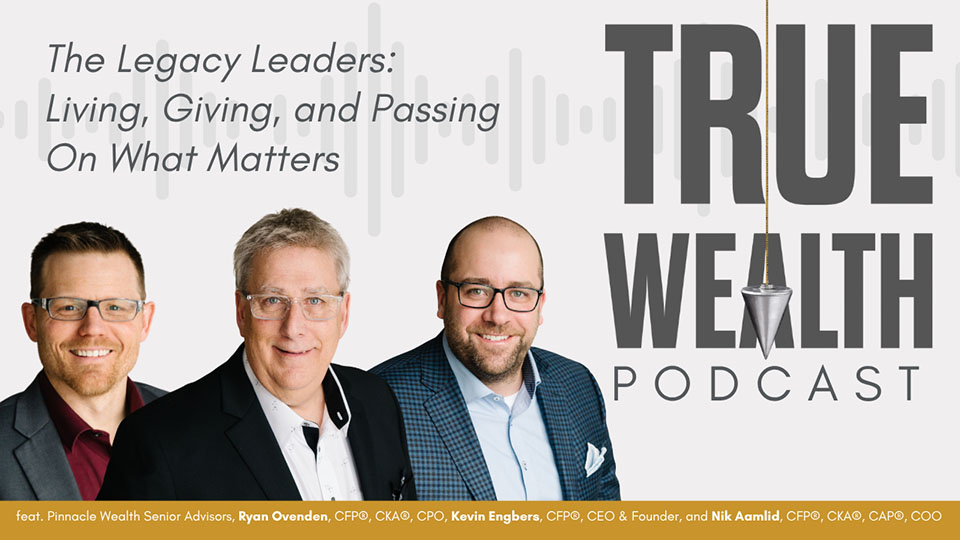
In Episode 18 of the True Wealth Podcast, Kevin Engbers, Ryan Ovenden, and Nik Aamlid unpack the final life stage in the Pinnacle Wealth framework: the Legacy Leaders, generally those age 76 and beyond.
This stage is often associated with leaving a legacy, but the conversation challenges the idea that legacy is simply about the money, property, or possessions someone leaves behind. Legacy is something that can be lived out every day through relationships, wisdom, generosity, stories, values, and intentional influence.
The hosts explore the unique perspective that comes with decades of life experience and why those in the Legacy Leader stage still have so much to contribute. They discuss the importance of sharing stories, communicating appreciation while there is still time, and intentionally passing emotional and spiritual capital to the next generation alongside financial resources.
The conversation also offers an important challenge to younger generations: don’t wait until it’s too late to ask questions, hear stories, and learn from the people who came before you.